
Fuel costs represent one of the largest controllable expenses on a working farm. At times of elevated oil prices, fuel can account for a substantial share of total variable costs, and the volatility of the oil market means that the figure can change significantly from one season to the next. For farming businesses in North Wales, where the terrain, the climate, and the geography of rural supply chains all create particular fuel management challenges, taking a systematic approach to fuel procurement and consumption pays dividends.
This article looks at how North Wales farmers can manage their agricultural fuel supply north wales more effectively: from procurement and storage through to consumption monitoring, machinery maintenance, and the emerging options for reducing the carbon footprint of farm operations. The focus is practical rather than theoretical, reflecting the realities of farming across the diverse landscapes of Gwynedd, Conwy, Denbighshire, Anglesey, Flintshire, and Wrexham.
Understanding Your Farm’s Fuel Consumption Profile
The starting point for any effective fuel management strategy is understanding how much fuel your operation uses, when it uses it, and what it is used for. This sounds straightforward but is often done less rigorously than it should be. Many farms order fuel reactively, when the tank gets low, without a clear picture of how consumption varies through the year or how it breaks down between different machinery, operations, and buildings.
A simple fuel log, recording each delivery received, each dispensing event from the bulk tank, and the machinery or application each draw-down relates to, provides the data needed to understand your consumption profile. Over a full year, this data reveals seasonal patterns, identifies high-consumption periods, and allows comparison of consumption between machinery and operations. It also provides the baseline against which improvements can be measured.
For farms with a fuel management system or a dispensing meter on the bulk tank, this data may already be available in electronic form. Remote tank monitoring systems that record both deliveries and draws can generate automated consumption reports that require minimal manual input. For farms without this infrastructure, a simple paper log kept at the dispensing point is an adequate starting point.
Seasonal Patterns on North Wales Farms
The seasonality of fuel demand on North Wales farms varies considerably by farm type, but some broad patterns are common across the region.
Spring and Summer: Peak Machinery Demand
Spring cultivation, planting, and silage-making represent the first major fuel demand peak of the year for mixed and arable farms across the Vale of Clwyd, the Wrexham area, and the lower-lying parts of Denbighshire and Flintshire. Tractors run long hours, contractors are on site, and the pressure of weather-dependent work compresses operations into short windows where machinery reliability and fuel availability are critical.
On the hill farms of Gwynedd and the upland areas of Conwy, spring brings the movement of livestock to common grazings and the beginning of the lambing season, which is less fuel-intensive in machinery terms but may increase demand for heating fuel in lambing sheds during cold snaps in March and April. The unpredictability of the weather at this altitude means that heating fuel reserves should not be depleted too early in the spring.
Harvest: The Highest Demand Period
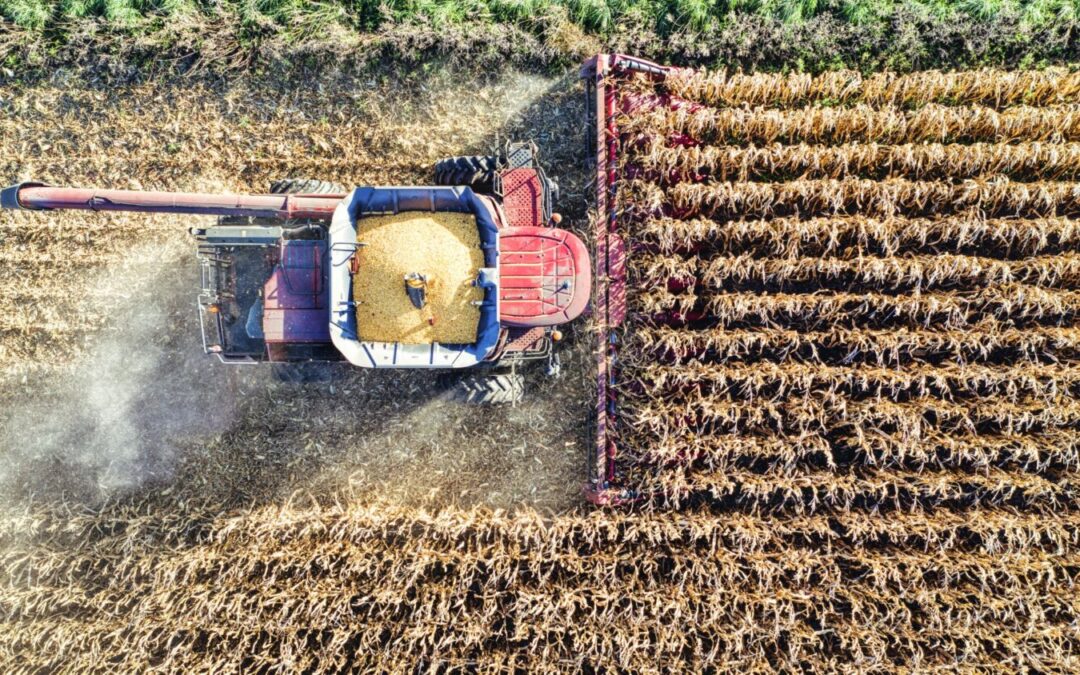
Grain harvest, typically running from late July through September on lowland North Wales farms, is the highest fuel demand period of the year for combinable crop producers. Combines, grain carts, dryers, and the associated tractor work involved in moving and storing grain all run simultaneously and require reliable fuel supply around the clock during the harvest window. A fuel shortage at harvest is not merely an inconvenience: it can directly affect grain quality if drying is interrupted and cause significant financial loss if the weather window closes before harvest is complete.
Ensuring the bulk tank is filled to capacity before harvest begins, and maintaining a clear line of communication with your fuel supplier so that a rapid top-up can be arranged if consumption exceeds expectation, is basic harvest preparation that is sometimes overlooked in the pressure of the season.
Autumn and Winter: Heating Demand and Autumn Cultivations
Autumn cultivations and winter drilling maintain machinery fuel demand through October and November. As the season progresses, heating fuel becomes an increasing proportion of total consumption as livestock are brought in, grain stores require heating or ventilation management, and farmhouses and farm buildings require their oil-fired heating systems to operate continuously.
Winter on North Wales upland farms is demanding in energy terms. The combination of machinery heating, livestock building heating, and farmhouse heating creates a sustained fuel demand that runs through to March or April. For farms at altitude in Eryri or on exposed ground on Anglesey, where winter temperatures and wind chill are more severe than in the lowland areas, this demand can be very significant. Winter fuel planning should begin in September at the latest.
Procurement Strategies: Getting the Best Value on Agricultural Fuel
The oil market is volatile, and agricultural fuel prices in the UK move in response to global crude oil prices, the sterling exchange rate, refinery capacity, and seasonal demand patterns. While it is not possible for individual farming businesses to predict market movements with confidence, there are procurement strategies that can reduce costs and improve supply security over time.
Bulk Ordering
Fuel suppliers typically price deliveries on a pence-per-litre basis that decreases with volume. A larger delivery, filling the tank to capacity rather than simply topping it up, will generally achieve a lower unit cost than a smaller delivery of the same product. For farms with adequate storage capacity, ordering in bulk when prices are relatively favourable is a straightforward way to reduce average fuel costs over the year.
This approach requires adequate storage capacity and reasonable confidence that the fuel will be used within a sensible timeframe. Gas oil stored for more than six to twelve months without appropriate additives can suffer degradation and stability problems. For farms that store fuel for extended periods, a stability additive should be used at the time of filling to protect the quality of the stored product.
Scheduled Delivery and Top-Up Plans
Many fuel suppliers offer scheduled delivery arrangements under which the supplier monitors the customer’s tank level and arranges deliveries at defined intervals or when the level drops to a pre-agreed point. This removes the administrative burden of fuel monitoring from the farmer and reduces the risk of running out at a critical moment. For busy farming operations where monitoring the fuel tank is a low priority compared to the demands of the day, a scheduled delivery arrangement provides straightforward peace of mind.
Top-up plans combined with remote tank monitoring give the supplier visibility of actual stock levels without the need for site visits or manual dip readings, and allow deliveries to be scheduled precisely when they are needed rather than on a fixed calendar basis regardless of actual consumption.
The Value of a Trusted Local Supplier Relationship
Price comparison between fuel suppliers is a reasonable exercise, but the cheapest price on any given day is not always the best value over time. A supplier who has served agricultural customers across North Wales for many years, who knows the access requirements of individual farms, who responds quickly to urgent requests during harvest or cold weather emergencies, and who can advise on fuel quality, additives, and tank issues is worth more to a farming business than an unknown national supplier offering a marginally lower pence-per-litre price.
The North Wales agricultural community is close-knit, and reputation matters. A fuel supplier with a long track record of reliable delivery to farms across Anglesey, Gwynedd, Conwy, Denbighshire, Flintshire, and Wrexham has earned that track record through consistent performance, and that consistency has real value when you need fuel delivered to a remote holding on a difficult January morning.
Reducing Agricultural Fuel Consumption: Practical Measures
Reducing fuel consumption on a farm is both an economic and an environmental objective, and the measures that achieve it are almost always also good agricultural practice. The following approaches are well established and applicable across the range of farm types found in North Wales.
Tractor and Machinery Maintenance
A poorly maintained engine consumes more fuel than a well-maintained one. Blocked air filters reduce combustion efficiency and increase fuel use. Worn injectors produce incomplete combustion. Low tyre pressures increase rolling resistance, particularly on road haulage work, and increase fuel consumption significantly. A tractor running on incorrect tyre pressures for its operation, too low for road work and too high for field work, wastes fuel in both settings.
Following manufacturer service schedules, using the correct engine oil specification, and addressing minor mechanical issues promptly rather than allowing them to develop are all straightforward measures that maintain machinery at peak efficiency. On a tractor clocking hundreds of hours per year, the fuel savings from well-maintained equipment are material.
Efficient Field Operations
How field operations are planned and executed has a significant impact on fuel consumption. Matching tractor power and implement width to the specific task avoids the over-powering of lighter operations, which wastes fuel. Operating at the optimal engine speed for the task, using the tractor’s higher gears at lower engine speeds wherever the load permits, reduces fuel consumption significantly compared to operating at full throttle in lower gears. Modern tractors with auto-shift transmission and engine management systems automate much of this optimisation, but on older machinery it requires driver awareness and discipline.
Reducing field headland turns, optimising tramline layout to minimise empty travel, and combining operations where agronomically appropriate, such as combining establishment passes, all reduce the number of tractor hours required to complete a given area of work and therefore reduce fuel consumption proportionally.
Minimum Tillage and Direct Drilling
Tillage is among the most fuel-intensive operations on an arable farm, and reducing tillage intensity through minimum tillage or direct drilling systems is one of the most effective ways to reduce overall farm fuel consumption. The transition from a conventional plough-based system to a minimum tillage or no-till system can reduce fuel use for establishment by fifty percent or more, depending on the operations replaced.
For the mixed farms that predominate across much of North Wales, where grass establishment and reseeding are significant operations, precision establishment techniques that minimise soil disturbance and associated tractor work are increasingly available and agronomically viable across a range of soil types, including the heavier soils found in the Wrexham area and parts of Flintshire.
Building Insulation and Heating System Efficiency
For farms where a significant proportion of fuel consumption goes to heating agricultural buildings, addressing the thermal efficiency of those buildings can reduce heating fuel use substantially. Many older agricultural buildings in North Wales are uninsulated or poorly insulated, with roof lights, open eaves, and draughty door seals that allow heat to escape rapidly in cold weather. Adding insulation, fitting draught-proofing, and servicing oil-fired heating systems to ensure they are operating at peak efficiency are all investments that return their cost in reduced fuel consumption over a relatively short period.
Oil-fired boilers and space heaters should be serviced annually by a qualified technician. A poorly tuned burner operates well below its rated efficiency, consuming significantly more fuel than a correctly calibrated system to deliver the same heat output. Annual servicing also identifies deteriorating components before they fail, reducing the risk of a heating system breakdown at the worst possible moment during the winter livestock period.
Red Diesel Record Keeping and HMRC Compliance
The use of rebated fuel by agricultural businesses is a legitimate entitlement but one that comes with a compliance obligation. HMRC has the power to inspect agricultural premises and vehicles to check that rebated fuel is being used only for qualifying purposes. In the event of an inspection, the ability to demonstrate clearly and accurately what fuel has been purchased, how it has been used, and that all uses are within the agricultural exemption is essential.
Good record keeping for agricultural fuel includes:
- Retaining all delivery notes and invoices for gas oil and other fuels for at least four years
- Maintaining a dispensing log that records when fuel was drawn from the bulk tank, in what quantity, for which vehicle or machinery, and for which purpose
- Keeping a clear separation between vehicles and machinery used for qualifying agricultural purposes and those used on public roads, with white diesel used for the latter
- Being able to demonstrate that any vehicle found to contain red diesel is used exclusively for qualifying agricultural purposes and does not travel on public roads
- Documenting any diversification activities on the farm that might affect the qualifying status of fuel use, such as contracting work carried out for non-agricultural clients
The penalties for misuse of rebated fuel are significant, including back duty on the quantity of fuel assessed as having been misused, a surcharging penalty, and the potential seizure of the vehicle concerned. Where there is any uncertainty about whether a particular use qualifies for the agricultural entitlement, HMRC guidance or specialist advice should be sought before proceeding.
Fuel Theft on Rural Farms: Prevention and Response
Agricultural fuel theft is a persistent problem in rural areas across the UK, and North Wales has not been immune. Bulk fuel tanks on isolated farm sites present an attractive target, particularly when oil prices are high. The theft of several hundred or several thousand litres of gas oil causes direct financial loss, operational disruption, and in some cases environmental damage if the theft damages the tank or its fittings.
- Install the tank in a well-lit, secure location if possible, ideally within view of CCTV coverage from farm buildings
- Fit a high-quality lockable security cap to all fill points and dispensing valves
- Consider fitting a dispensing meter with a key-lock or code-lock system that restricts access to authorised personnel only
- Use anti-siphon devices where the tank design permits
- Install an alarm system that triggers if the tank or its fittings are tampered with
- Maintain a record of tank levels so that discrepancies between consumption and recorded usage are quickly identified
- Consider remote monitoring, which can detect unexpected level drops that may indicate theft
Reporting fuel theft to the police and to the NFU Mutual rural crime team, as well as to neighbouring farms, helps to build a picture of criminal activity in the area and can assist in the identification and prosecution of those responsible. Many rural crime incidents in North Wales are connected, and information sharing between affected farms is one of the most effective tools available to the rural community.
Agricultural Fuel and the Farming Subsidy Landscape in Wales
Wales has followed a distinct path in agricultural policy since the end of EU direct payments. The Sustainable Farming Scheme (SFS), currently in development by the Welsh Government, will replace the Basic Payment Scheme with a new system of support payments linked to the delivery of sustainable farming practices and environmental outcomes. The detail of the scheme continues to evolve, but the direction of travel is clear: Welsh agricultural policy will increasingly reward farming systems that reduce their environmental impact, including their carbon footprint.
Fuel consumption is directly linked to the carbon footprint of a farming business. Farms that can demonstrate reductions in fossil fuel use, whether through efficiency improvements, the adoption of renewable liquid fuels such as HVO, or the integration of renewable energy generation into their operations, are better placed in the transition to the new policy framework. For North Wales farmers thinking about long-term business sustainability, the fuel management practices discussed in this article are therefore relevant not only to immediate operating costs but to the farm’s positioning in a policy environment that will increasingly value lower-carbon production.
Conclusion: Making Fuel Work Harder for Your Farm
Agricultural fuel management is an area where relatively modest improvements in procurement, storage, consumption monitoring, and machinery maintenance can add up to meaningful savings over the course of a year. For North Wales farmers operating in a landscape where costs are significant, margins are often tight, and the practicalities of remote rural supply create additional challenges, the combination of a systematic approach to fuel management and a reliable, knowledgeable local supply partner makes a genuine and tangible difference.
The farms of North Wales, from the coastal lowlands of Anglesey and the productive valley floors of the Vale of Clwyd to the demanding uplands of Eryri and the Berwyns, are diverse in their character and their requirements. What they share is a dependence on reliable, high-quality fuel supply as a foundation for everything that happens on them. Getting that foundation right deserves the attention it is rarely given until something goes wrong.
Recent Comments