
Your roof is the most important element of your home’s fabric. It is the first line of defence against the rain, wind, frost and driving coastal weather that North Wales delivers in generous measure, and yet it is also the part of the house that most homeowners think about least, right up until something goes wrong. A well-maintained roof protects everything beneath it. A neglected one allows problems to multiply quietly and expensively until they can no longer be ignored.
This guide covers everything a North Wales homeowner needs to know about their roof, from understanding the different types of roofing and when each is appropriate, to spotting the signs that repairs are needed and knowing how to choose qualified roofers north wales you can trust.
Why Roofing in North Wales Demands Specialist Knowledge
Not all roofing is the same, and not all roofing companies are equally equipped to handle every type of roof or every set of conditions. North Wales presents a specific challenge. The combination of high rainfall, prevailing Atlantic winds, salt-laden coastal air and, in the upland areas, significant temperature variation creates a demanding environment for roofing materials and fixing methods alike.
Properties in the region range from Victorian and Edwardian slate-roofed terraces and detached homes to post-war housing with concrete tiles, flat-roofed extensions, modern residential developments and commercial buildings of every description. Each type requires a different approach, different materials and a different level of expertise. A roofer who is experienced across all of these roof types, and who understands the specific challenges of working in North Wales conditions, is worth their weight in the materials they install.
Types of Roof: Understanding Your Options
Slate Roofs
Slate is the traditional roofing material of Wales, and for good reason. Natural slate is extraordinarily durable, largely impervious to water and frost, and capable of lasting well over a century when properly installed and maintained. Many Victorian properties across North Wales still carry their original slate roofs, a testament to the quality of both the material and the craftsmanship that laid it.
Welsh slate in particular has a deserved reputation for quality. Its fine grain, density and low water absorption make it exceptionally resistant to the freeze-thaw cycles that damage lesser materials, and its natural colour and texture give it an aesthetic quality that is deeply embedded in the character of the Welsh built environment.
When a slate roof begins to fail, it is rarely because the slates themselves have worn out. More commonly, the culprit is the nails that fix the slates to the battens. Over time, these nails corrode and lose their grip, allowing individual slates to slip or fall. This process is sometimes called nail sickness and is a natural consequence of age rather than poor installation. The remedy may be as simple as replacing individual slipped slates or re-nailing specific sections, but if nail sickness is widespread across the roof, a full re-roof using the original slates or a combination of reclaimed and new materials may be the most cost-effective long-term solution.
Reclaimed slates deserve particular mention. For property owners in North Wales who want to maintain the character and appearance of their home, particularly on listed buildings or properties in conservation areas, reclaimed Welsh slate is the ideal material. It matches the colour, texture and scale of original roofing precisely, avoids the plastic appearance of some modern alternatives, and is a genuinely sustainable choice that gives a second life to excellent material. Sourcing quality reclaimed slates requires specialist knowledge, and a roofer with established access to reclaimed slate supplies is invaluable for this type of work.
Tiled Roofs
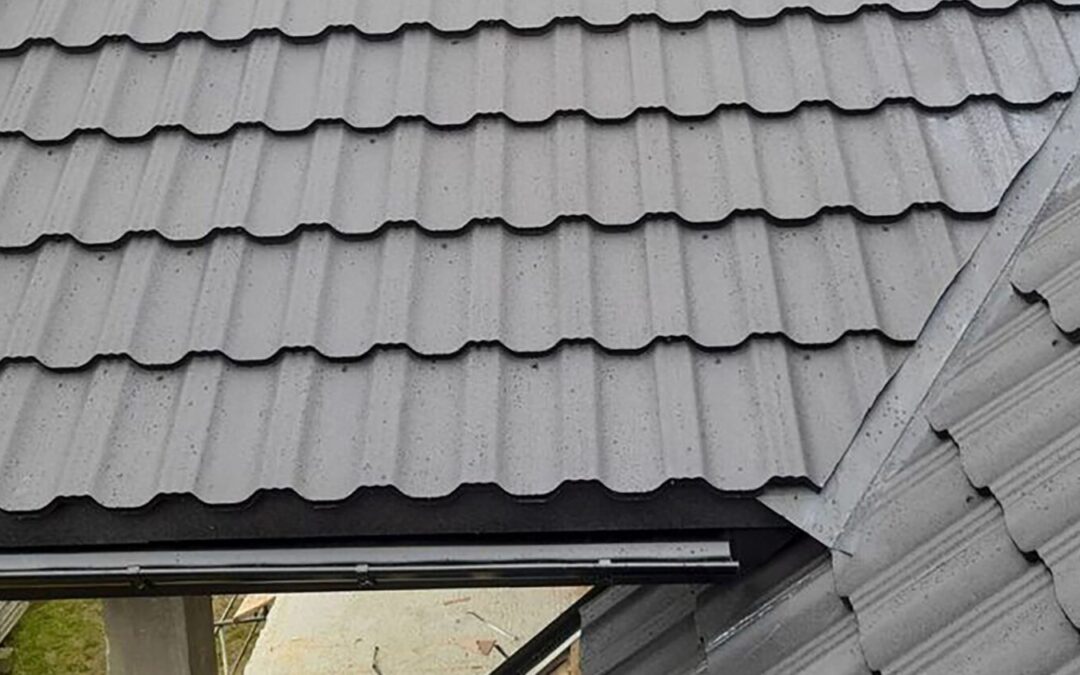
Concrete and clay tiles are a common roofing material on post-war housing across North Wales. They are durable, relatively low maintenance and available in a wide range of profiles and colours. Concrete interlocking tiles became the standard specification for volume housebuilding from the 1950s onwards and remain in widespread use today.
The most common problems with tiled roofs include cracked or broken individual tiles, slipped tiles caused by fixing failures similar to nail sickness in slate, and the deterioration of mortar around ridge tiles and verges. Ridge tiles, which cap the apex of the roof, are a particularly common source of problems. The mortar bedding that holds them in place can crack and degrade over time, allowing the tiles to become loose. A loose ridge tile is not just a cosmetic problem: it can allow water ingress directly into the roof structure and, if it falls, poses a genuine safety risk.
Repointing ridge tiles and verges is one of the most common roofing repair jobs and one that is well worth addressing promptly at the first sign of mortar deterioration. Many roofers now use a dry-fix ridge system as an alternative to mortar bedding, which is more resistant to the thermal movement and wind uplift that cause mortar joints to crack over time.
Flat Roofs
Flat roofs are found on a wide range of buildings in North Wales, from garage roofs and single-storey extensions to commercial premises and larger residential structures. Despite their name, flat roofs are not truly flat; they are laid with a slight fall to allow water to drain, but they lack the pitch of a conventional sloped roof.
The challenge with flat roofs has traditionally been longevity and waterproofing performance. Older felt flat roofs, laid in multiple layers of bitumen-impregnated felt, have a relatively limited lifespan of around ten to fifteen years and are susceptible to a range of problems including ponding water, blistering in hot weather, cracking as the material becomes brittle with age, and failure at joints and upstands.
Modern flat roofing materials have significantly improved on this performance. Two systems in particular have transformed the flat roofing market.
EPDM rubber roofing is a single-ply synthetic rubber membrane that is bonded or mechanically fixed to the roof deck. It is highly flexible, resistant to UV degradation and temperature extremes, and capable of spanning large areas without joints, which eliminates one of the most common failure points in older felt systems. A correctly installed EPDM roof can be expected to perform well for fifty years or more, making it a genuinely long-term solution rather than a temporary fix.
Fibreglass (GRP) roofing uses glass-reinforced plastic resin to create a seamless, rigid waterproof surface. It is particularly well suited to roofs with complex details, upstands, outlets and penetrations, as it can be moulded precisely to suit any shape. GRP roofing is hard-wearing, resistant to foot traffic, and gives a clean, professional finish that is often preferred for visible flat roof areas. It typically carries a guarantee of twenty-five years or more when installed by a qualified operative.
The choice between EPDM and GRP depends on the specific characteristics of the roof, the budget and the client’s requirements. A qualified flat roofing specialist will be able to advise on the most appropriate system for each situation.
New Roofs
For properties requiring a complete new roof, whether due to the age and condition of the existing covering, structural changes to the property, or new construction, the process involves considerably more than simply laying new tiles or slates.
A full re-roof typically involves stripping the existing covering, inspecting and repairing the underlying structure of rafters and battens, installing new breathable roofing membrane, laying new timber battens and then fixing the new covering. At the same time, the opportunity should be taken to address any other issues identified in the roof structure, check the condition of the lead flashings around chimneys, valleys and abutments, and ensure that the eaves, ridge and verge details are properly executed.
The specification of a new roof should reflect the specific requirements of the property and its exposure. In coastal and upland areas of North Wales, wind uplift and driving rain are significant design considerations, and the fixing methods and material selection need to be appropriate for the conditions.
Fascias, Soffits and Guttering
While not technically part of the roof covering itself, fascias, soffits and guttering are integral to the proper functioning of the roof drainage system and the protection of the roof structure. They deserve attention whenever roofing work is being carried out.
Fascias are the boards that run horizontally along the eaves at the bottom edge of the roof, to which the guttering is attached. Soffits are the boards that close off the underside of the eaves, providing a finished appearance and, in ventilated form, allowing airflow into the roof space to prevent condensation. In older properties, these elements are often timber and can deteriorate over time, particularly where the guttering has been leaking and consistently wetting the boards.
UPVC replacements are now the standard choice for fascia and soffit replacement. They require no painting, are resistant to moisture and rot, and are available in a range of colours and profiles. Replacing deteriorated timber fascias and soffits at the same time as other roofing work is logical and cost-effective, as the scaffolding and access is already in place.
Spotting the Signs That Your Roof Needs Attention
Many roofing problems are invisible from ground level until they have progressed to the point where they are causing internal damage. Knowing what to look for and acting early is the most cost-effective approach to roof maintenance.
From the ground, look for missing, slipped or visibly cracked tiles or slates. Check the ridge and hip lines for tiles that appear out of alignment or where mortar is visibly missing. Look at the flashings around chimneys and where the roof meets any walls for signs of lifting or deterioration. Sagging or uneven rooflines can indicate structural problems with the rafters or purlins beneath the covering.
In the loft, check for daylight visible through the roof covering, which indicates gaps or missing slates or tiles. Look for water staining on the rafters or ceiling boards, which shows where water has been entering. Damp or condensation on the underside of the roof covering can indicate inadequate ventilation rather than a leak but is still worth investigating.
At the gutters, check for blockages, particularly in autumn, as debris-filled gutters cause water to back up under the roof covering and can lead to rot in the fascia boards and the ends of the rafters. Check that gutters are properly supported and fall toward the downpipes rather than sagging in the middle.
After storms, carry out a visual inspection from the ground for any tiles or slates that may have been displaced by high winds. Ridge tiles are particularly vulnerable to wind uplift, and a ridge tile that has shifted but not yet fallen is a priority repair.
Common Roofing Problems in North Wales Properties
Chimney stack issues. Chimney stacks are one of the most problematic elements of a roof in North Wales. They project above the roof line and are fully exposed to the weather on all sides. The lead flashings that seal the junction between the chimney and the roof are subject to constant thermal movement and can crack or lift over time. The mortar pointing between bricks can deteriorate, allowing water into the stack. Chimney pots can crack or become dislodged. Any of these failures can allow water to enter the property through what can appear to be a completely separate location from the actual entry point, making diagnosis difficult without specialist experience.
Valley failures. The valleys where two roof planes meet are another concentration of risk. They carry a high volume of water and require properly formed and maintained lead or GRP valley linings to prevent leakage. Lead valleys can develop pinhole leaks over time, particularly at joints, and inadequate or poorly installed valley systems are a common source of persistent roof leaks.
Condensation in the roof space. Modern standards require adequate ventilation to the roof space to prevent the build-up of condensation on the underside of roof coverings and on timbers. In older properties where additional insulation has been installed in the loft floor or between rafters without adequate ventilation provision, condensation can cause timber decay that is easily mistaken for a roof leak. A roofer familiar with roofing ventilation requirements can distinguish between the two and recommend the appropriate solution.
Storm damage. North Wales, particularly the coastal areas around Conwy, Llandudno and Colwyn Bay and the more exposed inland and upland areas, is subject to significant wind events. Storm damage to roofs typically manifests as displaced ridge tiles, lost slates or tiles, lifted lead flashings and in more severe cases, structural damage to the roof timbers. Prompt temporary weatherproofing following storm damage, followed by a proper assessment and repair, is important to prevent secondary damage to the building fabric below.
How to Choose a Qualified Roofer in North Wales
Finding a trustworthy and competent roofer is one of the most important decisions you will make as a homeowner, and unfortunately the roofing industry has more than its share of poor operators and outright rogues. Here is how to ensure you are choosing someone qualified and reliable.
Check accreditations. Membership of recognised schemes such as Constructionline and CQMS SSIP (Safety Schemes in Procurement) indicates that the company has been independently assessed against quality and safety standards. These accreditations are not merely decorative: they require the contractor to demonstrate that their work meets defined benchmarks and that their health and safety management is appropriate for the work they carry out. For homeowners, they provide a meaningful level of assurance that is worth seeking out.
Ask for references and look at previous work. A reputable roofer will be happy to provide references from previous clients and, where possible, show you examples of completed work. Online reviews and the company’s social media presence can also give a useful indication of their reputation in the local area.
Get more than one quote. For any significant roofing job, obtaining at least two or three quotes is sensible. Be wary of quotes that are dramatically lower than others, as this usually indicates either that materials or specification have been cut, or that the roofer is simply pricing to win the job with the intention of identifying additional costs later. A detailed, itemised quote that clearly sets out what is included is a much better basis for comparison than a single headline figure.
Check for insurance. Any roofing company working on your property should carry public liability insurance. Ask to see evidence of this before work starts. Working at height without adequate insurance cover exposes you as the homeowner to potential liability if an accident occurs.
Be wary of cold callers. Roofers who knock on your door unsolicited and tell you they have spotted a problem with your roof while working nearby are one of the oldest and most persistent forms of roofing scam in the UK. Legitimate roofing companies do not need to cold call for work. If you have concerns about your roof following such a visit, commission an independent assessment from a company of your own choosing rather than engaging the cold caller.
Choose a local company. A roofing company based in the local area has a reputation to maintain in the community and is more likely to be around in the future if any issues arise with the work. They will also have specific knowledge of local building styles, materials and the conditions that affect roofing performance in the area.
For homeowners in Colwyn Bay, Llandudno, Conwy and across the wider North Wales region, choosing a fully qualified, accredited roofing company with a proven track record in slate, tiled and flat roofing is the most important investment you can make in the long-term health of your property. A roof that is properly installed and maintained will protect your home reliably for decades. The cost of cutting corners is almost always paid back many times over in subsequent repairs, damage and disruption.
Recent Comments